
From a grape once mistaken for another to becoming a true emblem of Chilean winemaking, carménère is now living its finest moment. Today, wines made from this variety stand among the country’s most distinctive, offering remarkable quality across a wide range of price points.
According to Viña Morandé’s head winemaker, Ricardo Baettig, it took years after its “rediscovery” in Chilean soil in 1994 to fully understand how to grow it properly.
“For a long time, carménère was trapped between its vegetal character and over-ripeness, mainly because it had been planted in soils unsuited to its nature, too humid or too fertile. In the 1990s and 2000s, we learned through trial and error that this grape — so deeply ours — requires special care,” he explains.
He notes that carménère needs warm temperatures over a long period, as it is a late-ripening variety that takes more time to mature in the vineyard. When combined with well-drained clay soils — whether alluvial or granitic — these climatic conditions produce wines of unique character, with notes of fresh fruit, spice, and smooth, rounded tannins.
“Spicy, but not green. Its slightly herbal character shows a grape that behaves like one from a cool climate, even though it doesn’t actually grow in one,” says Baettig.
At Viña Morandé, carménère unfolds in four different labels — both varietals and blends — that perfectly express its Chilean soul and versatility.
Pionero Reserva Carménère, for instance, comes from alluvial soils with gravel and clay in the Maule Valley, where the climate is warm Mediterranean. It shows notes of red fruits such as blackberry and cherry, fresh herbs, and subtle hints of spice and black fruit on the palate — medium-bodied and elegant.
Also originating in Maule, the Terroir Wines Carménère-Malbec blend comes from vineyards planted over 20 years ago near the town of Botalcura, on the hills of the Chilean Coastal Range facing the Central Valley. Here, Carménère benefits from the warm, dry climate and the mineral influence of the granitic soils of the Secano Interior. Together with Malbec, it produces a wine full of dark fruits, spice, cedar, and a touch of clove — juicy, soft, and beautifully balanced.
Another key area for outstanding Carménère wines with excellent aging potential is the Maipo Valley, particularly at the foothills of the Andes Mountains. The climate here is temperate mediterranean, influenced by the cool breezes from both the Andes and the Maipo River.
The Morandé Selección de Viñedos Carménère grapes come from Campo Romeral, which has clay-loam soils on the river’s second geological terrace. Densely planted but carefully managed, these vines yield a wine of distinctive character. “There are black fruits and roasted red peppers, along with a distinctive smokiness that reflects the character of our Romeral Vineyard. On the palate, notes of white pepper, a long finish, and velvety tannins that age beautifully in the bottle,” says Baettig.
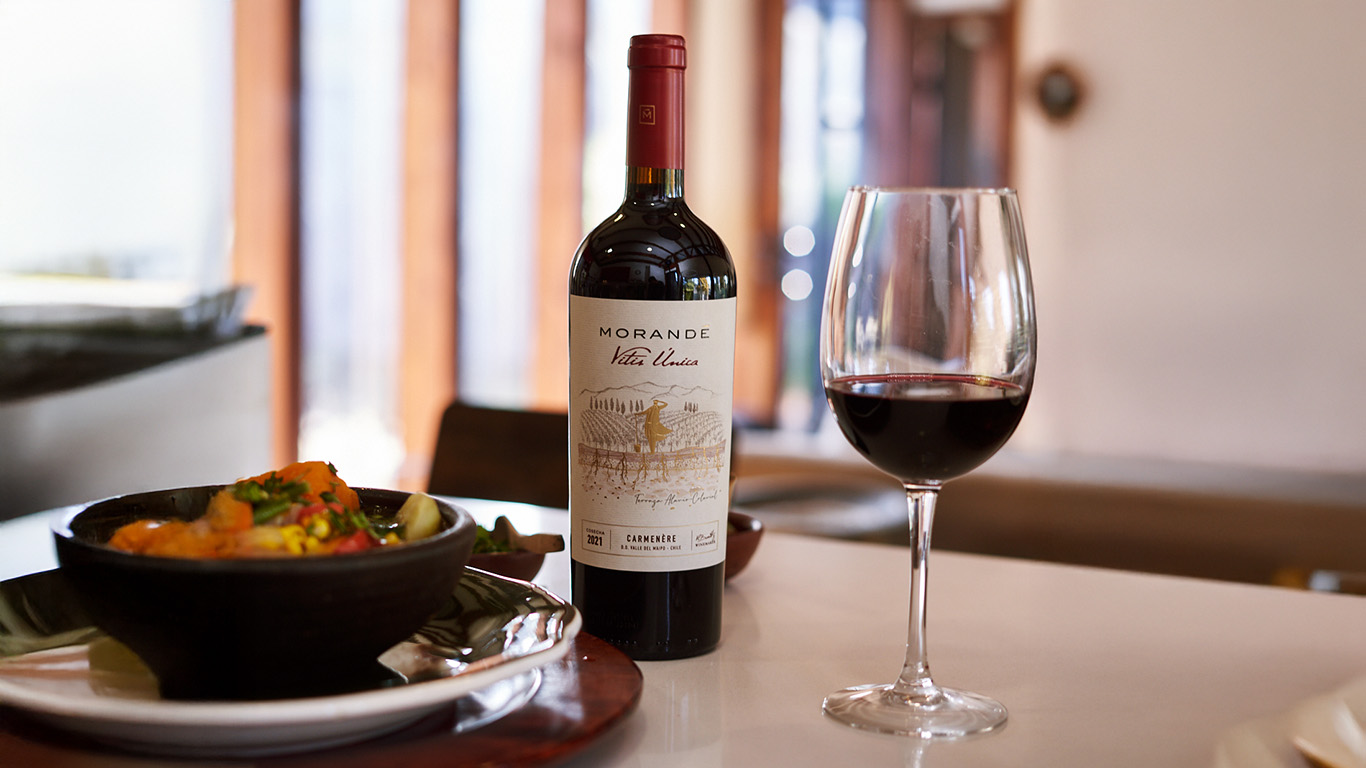
At Campo San Bernardo, on the other hand, the climate profile remains, but the soils are stony, with sand, clay, and low organic matter. The complex, fresh and concentrated Morandé Vitis Única Carménère comes from this terroir.
With meticulous berry selection and aging in 2,000- and 4,000-liter foudres, plus 20% new French oak barrels, this wine displays not only the classic notes of dark fruit and spice, but also nuances of pepper, roasted red pepper, graphite, and truffle.
From “difficult” to emblematic, carménère showcases more than versatility and quality — it embodies the strength of Chilean viticulture and the talent of its winemakers in revealing the grape’s finest expressions.