
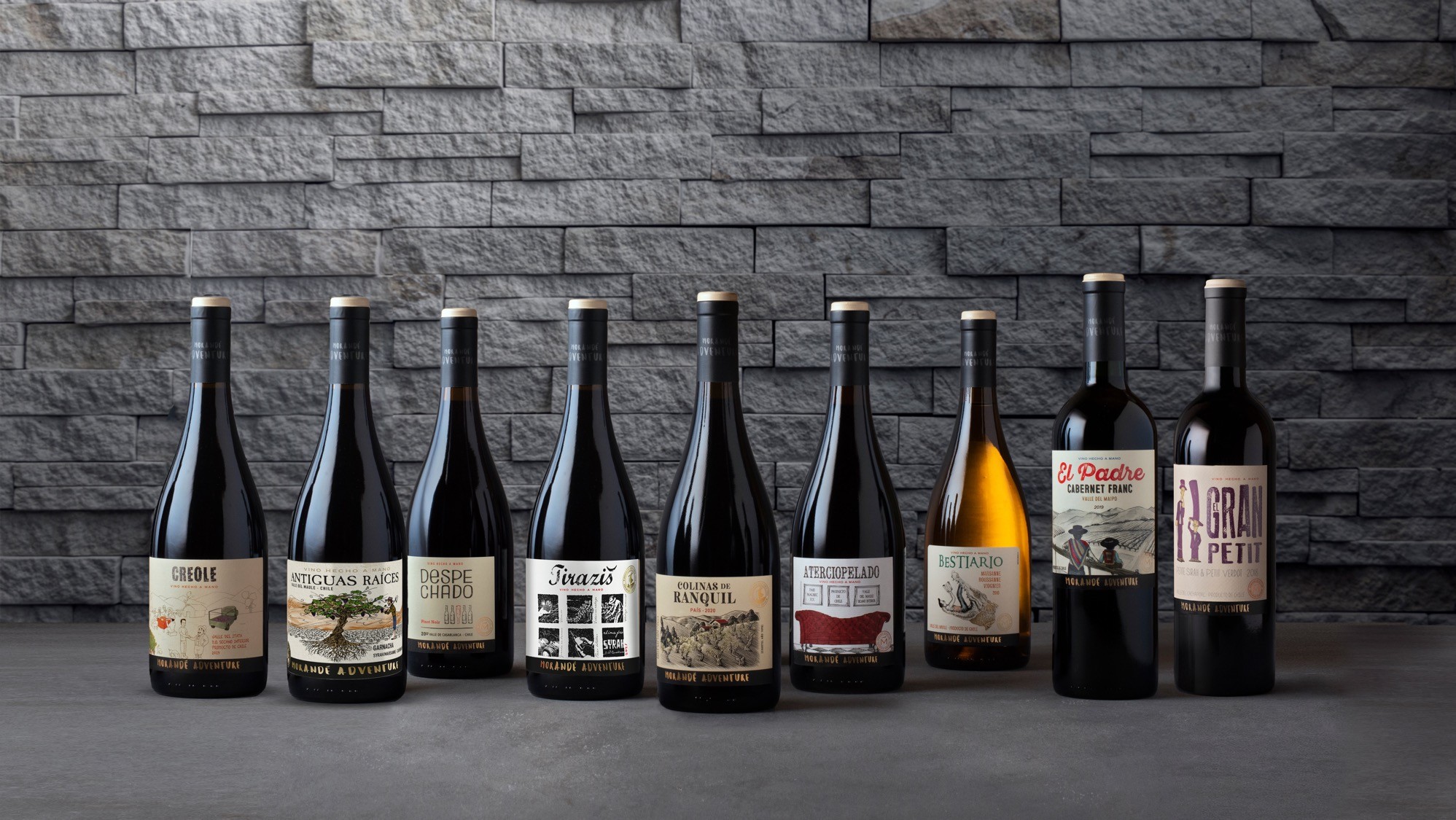
The birth of the Morandé Adventure line is one of the boldest chapters in the history of Viña Morandé.
Conceived by the visionary Pablo Morandé, the initiative — originally named Aventuras — emerged in 1997 with an innovative purpose: to create free-spirited wines that celebrate the diversity of Chile’s terroirs and grape varieties, including old vines and heritage grapes. Among the first varieties used in the project were cinsault, malbec, portugais bleu, and césar.
Around 2011, the project was revived and renamed under its current identity, bringing together the entire winemaking team at Viña Morandé to create wines that would tell new stories. Today, it is led by chief winemaker Ricardo Baettig, who shares this mission with talented winemaker Daniela Salinas.
Discover the Morandé Adventure wines
• Morandé Adventure Tirazis was the first Adventure wine — a complex and fresh syrah from the cool-climate Casablanca Valley. It comes from just 3.68 hectares of head-trained vineyards planted on the slopes of Cerro Algarrobo, at the Belén estate. In the Elamite language, Tiraziš means “Shiraz,” the name of an ancient Persian city believed to be the birthplace of the syrah grape.
• Morandé Adventure Despechado is a pinot noir made with 50% whole clusters, fermented with native yeasts in concrete eggs. It’s a low-intervention wine, bottled without filtration. Its name refers to the fact that these grapes were once destined for blends, without receiving the recognition they deserved.
• Morandé Adventure Creole is crafted from cinsault and país, two varieties deeply rooted in the culture and tradition of southern Chile, sourced from old dry-farmed vines in Itata and Maule. This label faithfully represents the Chilean countryside.
• Morandé Adventure Bestiario is an elegant yet bold orange wine, made by co-fermenting marsanne and roussanne from the Maule Valley, with a touch of viognier from Casablanca Valley. Its name is inspired by medieval bestiaries, popular books describing animals with moral and didactic purposes.
• Morandé Adventure El Padre pays tribute to cabernet franc, often overshadowed by the fame of Chilean cabernet sauvignon. Made from vineyards in the Maipo Valley, it demonstrates the great potential of this variety through a complex, structured, and elegant wine.
• Morandé Adventure Aterciopelado directly references the Terciopelo cauquenino, a soft wine made in the 1960s by blending the rustic país variety with malbec. Reinterpreted by Viña Morandé, it is reborn as a co-fermentation of these two grapes in concrete eggs, resulting in a fresh, fruity, and elegant red.
• Morandé Adventure El Gran Petit is the result of co-fermenting petite sirah and petit verdot in concrete eggs. These small-berried varieties, traditionally relegated to secondary roles in blends, share the spotlight here in a wine with a giant spirit, heart, and soul.
• Morandé Adventure Antiguas Raíces was born from the desire to showcase Maule’s potential for Mediterranean varieties, especially garnacha. It’s made by co-fermenting white and red grapes from old vines, creating a fruit-driven wine marked by vibrant red fruit, high acidity, and freshness.
• Morandé Adventure Colinas de Ránquil seeks to highlight the uniqueness of Chile’s most ancestral terroirs. This label is made from país grapes sourced from a more than 120-year-old vineyard in the Ránquil area, located in the Secano Costero of the Itata Valley. On the palate, it shows good structure, well-defined tannins, and subtle sweet spice notes like cinnamon.
With limited productions and artisanal methods, the Morandé Adventure wines embody the adventurous spirit of the winery — the union of innovation and tradition, and the constant pursuit of pushing the boundaries of Chilean winemaking.