
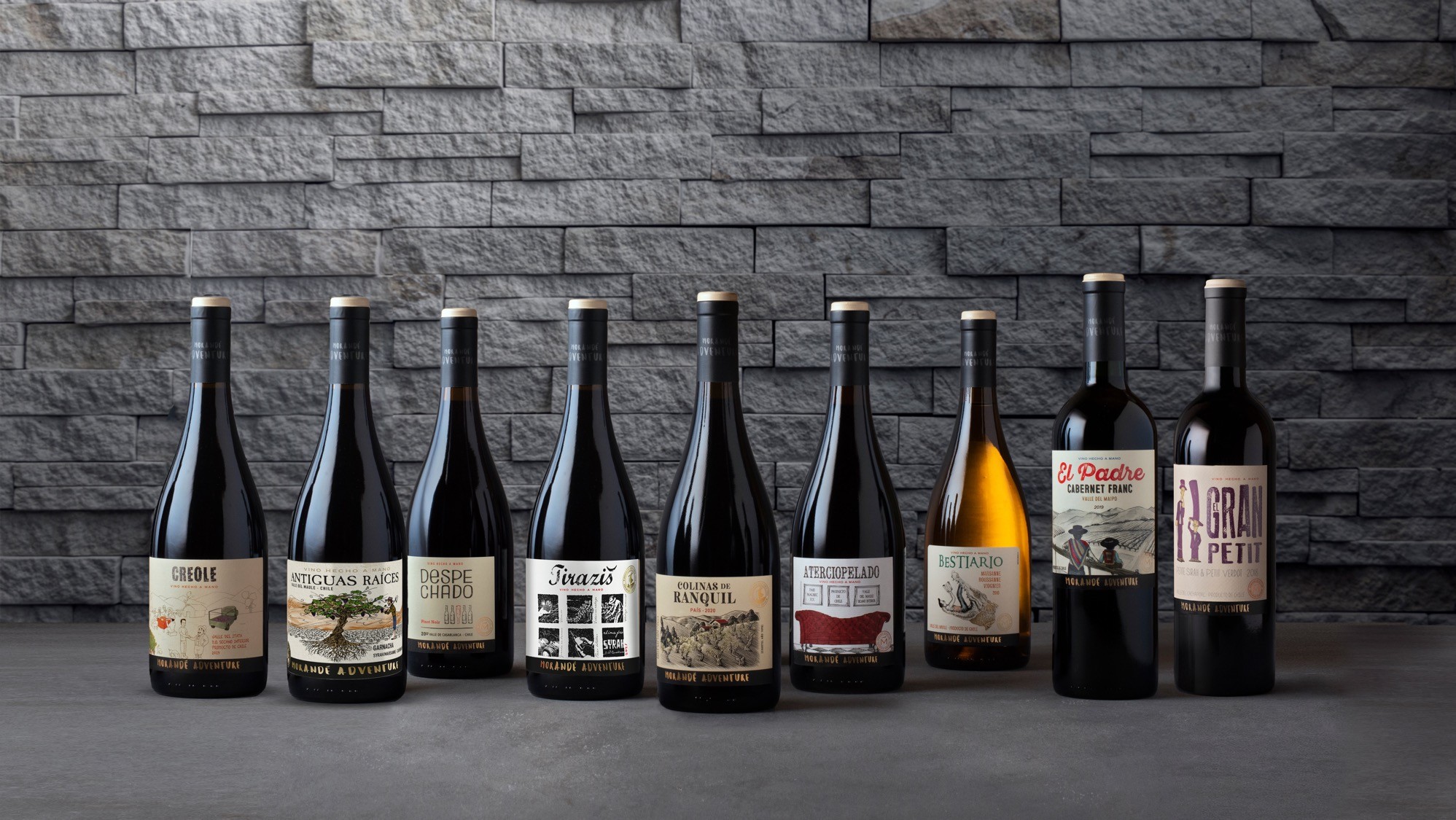
Among the many projects we’ve developed at Viña Morandé, Morandé Adventure holds a special place in my heart. Not only for what it represents in our history, but for what it symbolizes: the constant pursuit of innovation and authenticity.
When I joined the winery, the project had been launched in 1997 under the name Aventura, born from the restless and visionary mind of Pablo Morandé. He dreamed of free-spirited wines, created from curiosity and a desire to explore the full diversity of Chile — its unexplored terroirs, its heritage varieties, its winemaking legacy.
Around 2011, that adventurous spirit was renewed. We renamed the project Morandé Adventure, and from then on, it became a sort of laboratory of ideas — a platform where our entire winemaking team could experiment, take risks, and craft wines that told new stories (and revived old ones too).
Today, I have the privilege of leading this work alongside the talented Daniela Salinas, continuing to expand the horizon that Pablo envisioned years ago.
Each label in the line was born from a different impulse — a curiosity, a challenge, a desire to rediscover the chilean wine landscape.
Tirazis, for instance, was born in 2011 and was the first Adventure of the project’s second phase, crafted in the now-closed cellar of the House of Morandé store and restaurant we had in Casablanca. It’s a cool-climate syrah from the Casablanca Valley, sourced from small gobelet-trained parcels on the slopes of Cerro Algarrobo. In the ancient Elamite language, Tiraziš means Shiraz, the Persian city said to be the birthplace of syrah.
Despechado is a pinot noir made with minimal intervention, fermented with native yeasts in concrete eggs. Its grapes were once destined for blends — until we decided to give them the spotlight they deserved.
Creole expresses the heart of southern Chile. Made with cinsault and país from old dry-farmed vineyards in Itata and Maule, it’s a wine that, to me, faithfully reflects the rural soul of our country — from its origin to its label.
With Bestiario, we allowed imagination to take the lead: a white wine made like a red, crafted from marsanne, roussanne, and a touch of viognier, inspired by medieval books that described mythical creatures.
El Padre was born from the desire to honor cabernet franc, so often overshadowed by its famous genetic offspring, cabernet sauvignon. A deep and elegant wine from the Maipo Valley, it reveals the quiet strength of this noble variety.
Aterciopelado revives a lost tradition: Terciopelo cauquenino, a 1960s wine made with país and malbec. Here, we reinterpret that classic through co-fermentation, resulting in a vibrant, fruit-forward wine.
El Gran Petit proves that small grapes can achieve great things: petite sirah and petit verdot co-fermented in concrete eggs, creating a wine full of structure and energy.
Antiguas Raíces was born from the wish to showcase Maule’s potential for Mediterranean varieties — especially garnacha. A wine from old vines, co-fermented with white and red grapes, juicy and expressive.
And Colinas de Ránquil is an effort to revisit Chile’s most ancestral terroirs. It is a 100% país red wine from a century-old vineyard in the Secano Costero of Itata, with firm tannins, structure, and delicate notes of sweet spices.